
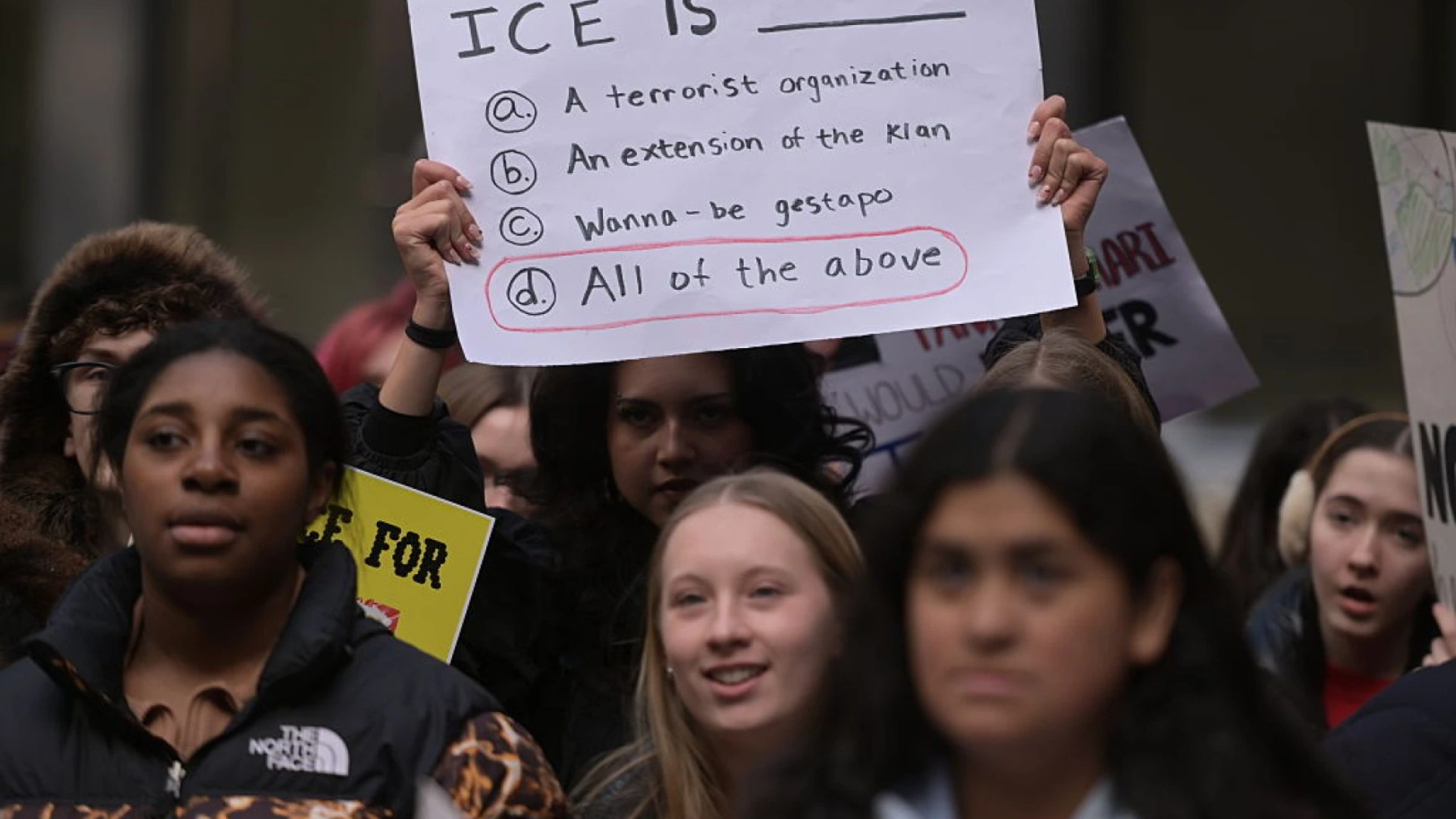
For decades, activists have continued to effect global change. As time has gone on, the landscape of activism has changed significantly, yet a core principle remains: real change comes from exercising the First Amendment, which guarantees the freedom of speech, religion, press, assembly, and petition. However, some question whether boycotting is still an effective tactic in today’s world.
Last month, Representative Jamie Raskin and several others conducted a Democratic hearing to address the Trump Administration's aggressive attacks on free speech, highlighting multiple incidents targeting Americans' rights to express themselves. These assaults on free speech fundamentally threaten the essential fabric of American liberty and the right to protest.
“All of these attacks on freedom, democracy, the rule of law, the right to assemble, the right to petition for redress of grievances, the right to free press, all of them have kick-started an equal and opposite reaction. Millions of people are standing up for the freedom of speech across the country, for the rights of people to protest, for the rights of the press to do their jobs unimpeded and unintimidated,” Raskin stated.
Critics of today’s activism landscape suggest that society has become heavily focused on revolution, with minimal attention to strategic plans for implementing real change. Many argue that current movements and boycotts are often performative, lacking deep systemic impact. Those who question whether people have the restraint to engage in civil disobedience often overlook the clear boundaries that distinguish today’s protests from those of yesteryear.
Boycotting laid the groundwork for the Civil Rights Movement, using a nonviolent economic tactic that targeted businesses and public services supporting Jim Crow laws. According to Stanford University, the Montgomery Bus Boycott, which lasted 13 months, was one of the most famous boycotts. During that time, over 90 percent of African American riders in Montgomery refused to use the city buses to protest racial segregation.
While older generations focused on addressing specific legal injustices, today's protesters have intensified their efforts by combining quick digital mobilization with physical action. So, it begs the question: why has modern-day protesting faced so much criticism? Society’s tendency to idealize the past has shifted focus away from the real progress that boycotting can achieve today. By replacing traditional sit-ins and marches with online calls to action, boycotting incentives have expanded their reach to tackle global injustices and foster quick international solidarity, effectively challenging unethical practices and systemic cultural issues.
GU spoke with our 2026 Cohort Future Icon, Marley Dias, about the current landscape of activism for Gen Z. Marley highlighted that social media platforms have empowered Gen Z activists to engage directly with corporate executives and marketing teams. This immediacy allows them to call out companies whose practices contradict societal values and demand transparency and ethical reforms. Marley firmly stated that these digital tools empower youth to hold corporations accountable, acting as powerful catalysts for reform within the fractured landscape of corporate accountability.
“The key is making sure our digital actions translate into sustained behavior change, not just a trending hashtag,” she told GU.
Instead of sticking to traditional boycott standards, Gen Z has called for a new approach. This digital approach significantly boosts organizational productivity and creates a digital record of effective ways to participate in the protests. GU sought to gain a deeper understanding of how social media fundamentally influences protest durations. To achieve this, we consulted renowned Gen Z activist Christina Brown, who leverages her social media platform to challenge societal and political issues.
Brown pointed out that individuals are increasingly mastering the effective use of their consumer power and social media strategies, making boycotting initiatives more accessible and enabling information to spread rapidly. She further emphasized that relying on traditional media channels to disseminate information is outdated, as people can now document protests independently, free from interference or misinformation.
“We no longer have to rely on big media to tell us our information, which often amplifies words like 'peaceful' and 'violent' to deter us from continuing to protest,” Brown told GU.
Protests now leverage consumer power and social media incentives to hold entities accountable and broaden efforts to fix policies rooted in injustice and discrimination. Furthermore, Marley emphasized that society has not abandoned the lessons of past movements but actively seeks to apply them as a guiding principle for authentic boycott incentives.
“The movements that actually win combine our digital reach with the deep community organizing that our elders mastered. We're not replacing what they built. We're building on top of it,” Dias told GU.
These social media initiatives have demonstrated the essence of practicing civil disobedience, with Democratic political organizers successfully launching several counterprograms to the boycott of Trump’s State of the Union address. Attracting over a million streams to rally voters before the upcoming midterm elections, they have provided a platform for progressive voices to advocate for reform.
Many of these political organizers have expressed a desire to protest policies they deem harmful, such as cuts to programs like housing and rental assistance, the Supplemental Nutrition Assistance Program (SNAP), and environmental regulations, rather than lending credibility or respectability to the administration's message. A collective consensus has been established amongst society to continue working towards progression through boycotting. The underlying message in today’s boycott era is that we must stop obeying those who have systematically exploited their political influence to disenfranchise us; instead, we need to rewrite the rules.
A few years back at the 2024 GU Summit, Lynae Vanee reflected on finding her voice in activism.
“Everything black people do is political. Everything we do is a form of resistance,” she told GU.
As a nation adjusts to a political climate, multiple Gen Z political influencers, such as Lynae Vanee, Yolanda King, Marley Dias, and others, have emerged to leverage their platforms and assert their political voices, driving change in corporate policies and tackling racial issues with conviction. Gen Z’s digital activism is a powerful form of engagement, effectively using social media campaigns and online awareness efforts to shape public opinion and influence policy.
While some see past protests as long lasting acts of civil disobedience, a cryptic message lies within these movements. The endurance of boycotts echoes Dr. Martin Luther King Jr.’s belief that true character is revealed in difficult moments. He famously said, “The ultimate measure of a man is not where he stands in moments of comfort and convenience, but where he stands at times of challenge and controversy.” This principle has challenged contemporary society to consider whether modern protests still embody a willingness to sacrifice personal comfort for moral principles and social justice.
Has Gen Z, along with the rest of the nation, succumbed to accusations of lacking the courage of civil disobedience because of an unwillingness to sacrifice comfort for morality? Absolutely not. Through the sustained efforts of collective boycotting and Black communities effectively utilizing their purchasing power, Target has experienced consecutive quarterly declines in sales in 2025 and a 30 percent drop in stock during a 40 day Target fast led by Dr. Jamal Bryant, resulting in a market value loss of $12.5 billion, according to Afro News.
Society must recognize that as we enter this new era of liberal protest, the methods of the older generations are now evolving. In today's political climate, protests must combine the wisdom of past generations with the digital mobilization of the current era. We require swift, decisive tactics to provoke meaningful change, ones that challenge comfort zones and dismantle corrupt systems. TikTok influencer Morgan Tailor noted, referencing future protest incentives, “We are going to have to suffer. It is not going to work if we remain comfortable.”
Many may ask: How can this be achieved in today’s society? It involves using our purchasing power to practice civil disobedience and clearly show that morality and principles outweigh comfort. These collective acts of solidarity demonstrate our unwavering commitment as a nation to pursue change, not just for America, but with a global reach to address systemic and cultural issues amid challenging political times.
The strength of boycotting relies heavily on the power of allyship. As documented by Black Past, in 1961, interracial activists known as the Freedom Riders challenged segregation in interstate travel by riding interstate buses to confront Supreme Court rulings. Their sacrifice led Attorney General Robert Kennedy to petition the Interstate Commerce Commission to outlaw segregation on interstate buses.
“We inherited these tools of protesting and boycotting from those who came before us; we're just learning how to apply those lessons to these new tools they didn't have, like social media. But there's always been people who protest, boycott, and fight. There's always been this drive to organize against those that oppress us,” Brown told GU.
By integrating social media into boycott strategies, society has demonstrated that digital mobilization combined with allyship can accelerate boycott efforts and expand their global reach. What used to take months of deliberation before organizing boycotting demonstrations can now be done with just the click of a button. Stephanie Williams reflected on the purchasing power of Black Americans during the Civil Rights Movement compared to today's protest strategies.
“Today, we don't have to walk long miles to boycott injustice. We have the ability to shop with the push of a button. The question is, do we have the courage to stop spending?” she said in Black Voices.
So, have we leveraged our purchasing power effectively without wavering? The results clearly demonstrate that we have. Supporting a cause cannot be a fleeting act that lasts only a year; it must persist as long as the mission requires to influence the system. As long as civil injustices persist, society will continue to find ways to protest. Whether through digital campaigns that promote a unified front of solidarity or by supporting minority businesses, protesting will always be a thing. During moments of collective solidarity, seek inspiration in the enduring words of John Lewis.
“Our struggle is not the struggle of a day, a week, a month, or a year; it is the struggle of a lifetime. Never, ever be afraid to make some noise and get in good trouble, necessary trouble, and help redeem the soul of America.”