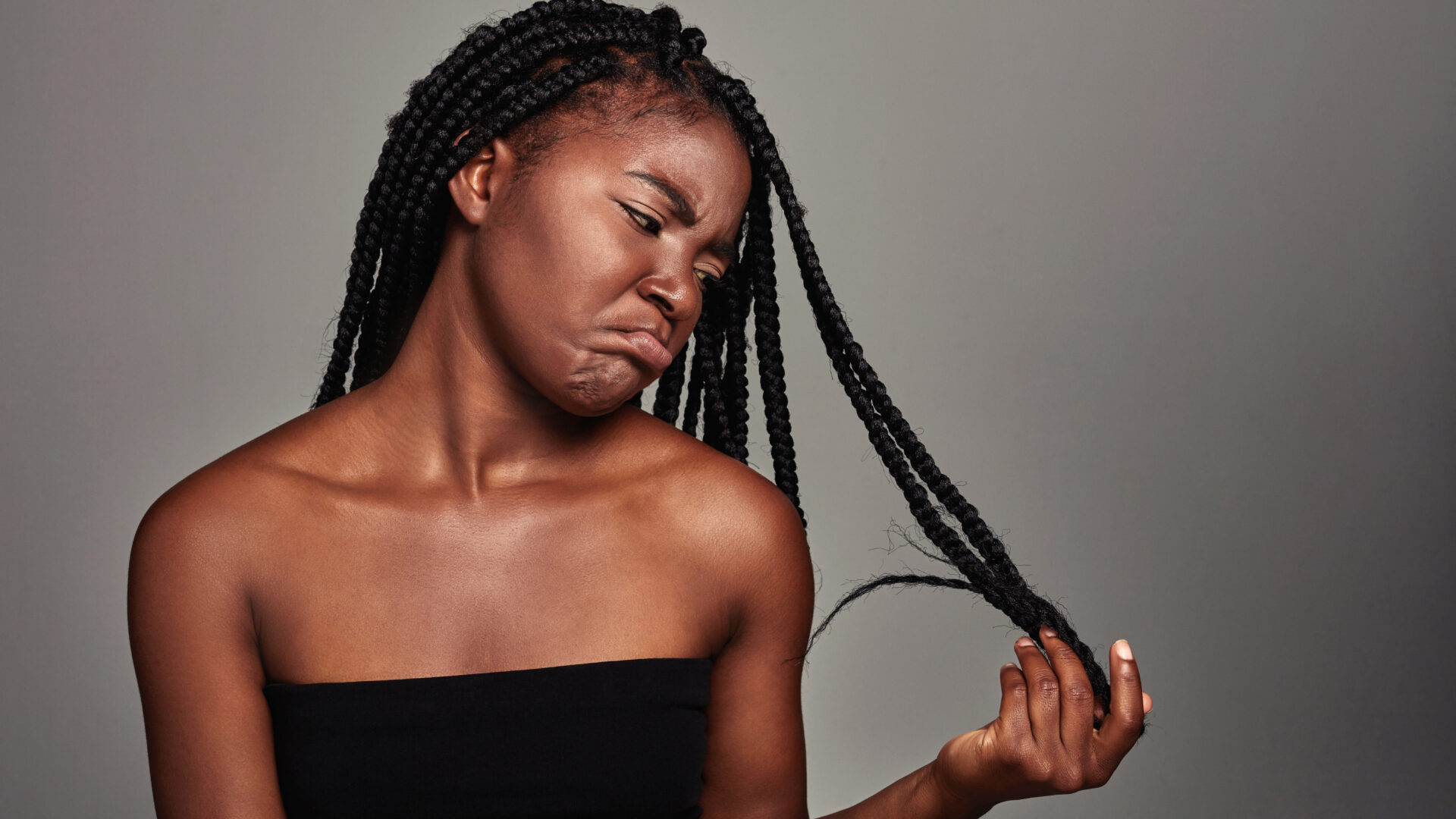

Many of us know the unspoken rule for Black women is that we’re not at our best mentally when our hair is not done. No matter the age, it’s become apparent the more we speak to each other that our hair is our crown, and our mental health is affected when it’s not styled how we want it.
“As a Black woman, my hair is my identity,” said Danielle King, Account Coordinator. I remember for a long time feeling inauthenticity from trying to fit in via my hair, And that meant burning my scalp to get the straightest look possible, spending an extra 30 minutes to make sure my baby hairs lay the right way, etc.”
For many Black women, showing up as your best means everything from head to toe is laid, but who set that standard? “When our crown is not representative of who we are, it’s a sign that our mental health and emotional health have taken a hit and have been assaulted within moments by society and social expectations,” said Dr. Akua Boateng, mental health expert.
In this new age of social media, we often see people who present themselves as being put together at all times, but we don’t address the isolation we feel when we don’t feel confident in our hair.
“In many ways, my hair and how I feel about myself are linked, whether I want it to be or not,” said Makalah Hampton, University Relations Specialist. “When I don’t like my hair, it can truly take a toll on my wanting to go out and be seen by others. If I do decide to go out still, there is this overwhelming feeling that people are staring at me, even though that is likely not the case, but it makes me self-conscious about myself and limits my ability to just live in the moment.”
According to The 2023 CROWN Workplace Research study, over 20% of Black women 25-34 have been sent home from work because of their hair.
Acts like that can create a detrimental effect on how we view our hair in specific spaces, but especially the workplace, and it forms an insecure feeling in Black women who feel like if they aren’t having the best hair day, then they will be made the center of attention for it.
“When entering the workforce, I always felt like I had to be someone I was not. It left me always feeling confused about my identity and what I stood for,” King said. “I felt like a different person every time I stepped into work and had anxiety attacks. It wasn’t until I started working for a Black-owned company that I felt like I could come in every day as my true self.”
Hair depression has become a well-known thing amongst Black women, and it can create a complex about having an unrealistic pressure on your shoulders to be perfect and fit into the mold society wants us to be a part of.
“How we present ourselves is our communication tool, as well as our communication vehicle with each other,” Boateng told GU. “We grow up with that, and we see our aunties, grandmothers, mothers doing that,t and we often do that ourselves, which can be a positive thing. It’s a positive thing when we’re finding our sense of affirmation, and it’s also a sign and possibly a part of how we are energetically communicating our needs as well.”
Read ‘How Social Media Affects Black Women’s Confidence’
Those moments of not having our hair done are when we see that we need to ask for help when feeling like we’re falling apart or going through a mental health decline. “After my mother’s passing to cancer, I noticed that I was undergoing a huge amount of stress , and it was a huge transitional period that honestly felt damaging to my mental health,” said writer Amber Little.
Through that period, Little noticed that her hair began to fall out, and she realized how intertwined hair and mental health were.
“I started to do prayer challenges in the Bible app, and Pilates helped me focus on my physical health while nourishing my hair in my scalp back to its original health,” Little said.
As we continue the conversation around hair depression and mental health, we must remain empathetic toward one another and provide resources for each other during those times.
“Your spirit is tied to every living part of your body, and when your spirit is going through something that shakes it to its core, your body will soon fall in line with how much damage your spirit has taken, and it is up to you as an individual to gather yourself and water your plant,” Little told GU.
Read ‘Bringing Awareness To Mental Health Action Day’
About Kenyatta: Clark Atlanta University and Medill School alumna Kenyatta Victoria is the Girls United writer covering everything from news, pop culture, lifestyle, and investigative stories. When not reporting, she’s diving deep into her curated playlists or binging her favorite comfort shows.