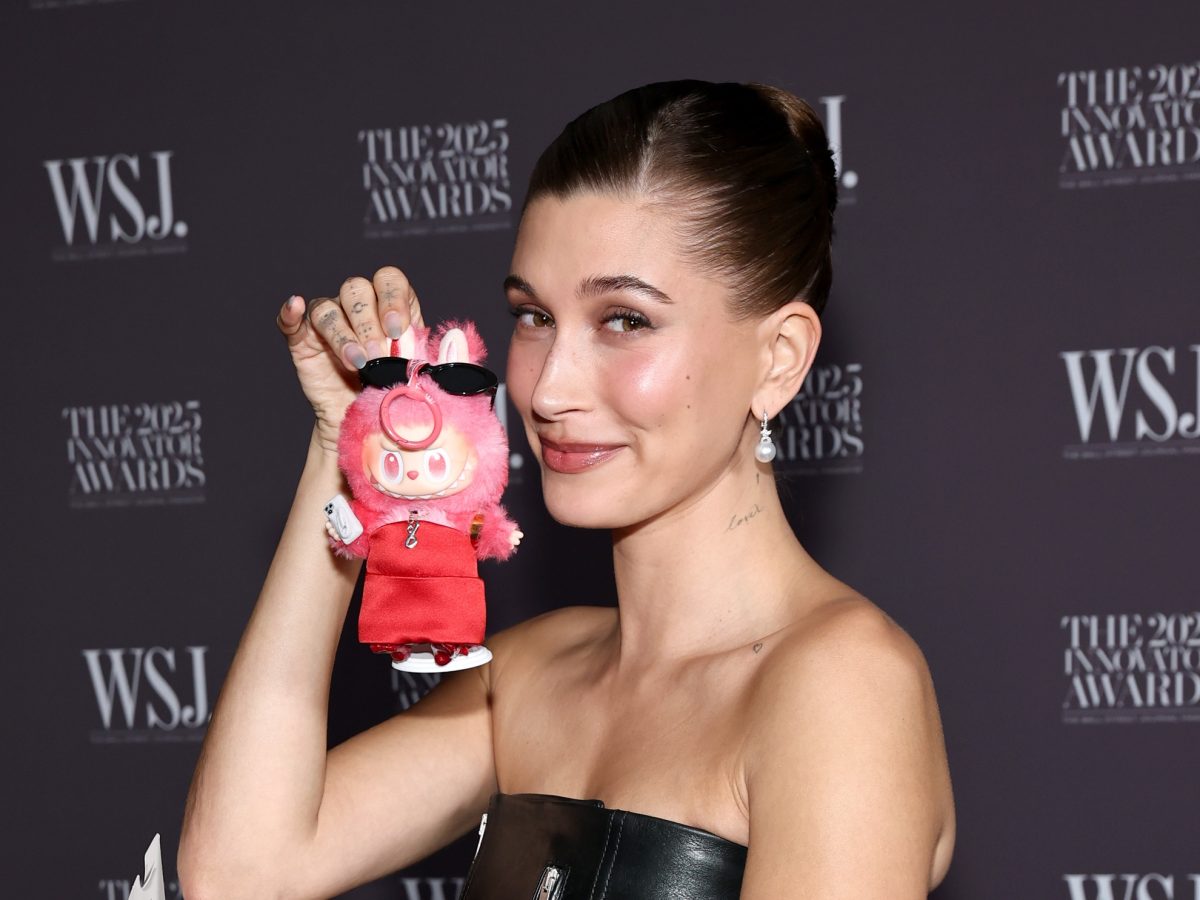

In April 2024, the world of collectibles was upended by a mischievous, toothy, elf-like monster named Labubu.
While the Pop Mart character had existed for years, it rocketed to global stardom following a viral endorsement from BLACKPINK’s Lisa. By the time Rihanna was spotted accessorizing her Louis Vuitton bag with a pink Labubu in February, and Dua Lipa appeared with the plush figures at public events, the verdict was in: Labubu was the ultimate 2024 status symbol.
Fans and fashionistas wasted no time embracing the craze. They stockpiled blind boxes, attached the dolls to luxury handbags, and turned the figures into essential fashion accessories. The hysteria peaked in June when a life-size Labubu doll sold for a record-breaking $150,000 (¥1.08 million) at a Beijing auction.
For a moment, the hype seemed unstoppable. While standard blind boxes retailed for a modest $20 to $30, the secondary market exploded. Resellers capitalized on the scarcity, flipping the dolls for two to five times their retail value. Yet, even at exorbitant markups, the little monsters sold out instantly.
However, gravity eventually comes for every trend. As the new year approaches, the Labubu bubble appears to be bursting. Resale values are declining, and investor confidence has wavered. In September, reports indicated that POP MART had lost billions in market value as the fever pitch cooled. According to Gurufocus, the valuation drop has been steep—a staggering loss of roughly $24 billion since the peak.
Why the sudden crash? It is a tale as old as modern capitalism: The trend is fading simply because a new one is already on the horizon.
We have seen this cycle play out in real-time across different industries, perhaps most notably in the “hydration wars.” In 2023, the Stanley Quencher reigned supreme, fueled by TikTok influencers and a scarcity marketing model that sent shoppers stampeding into retailers. But by late 2024, the cultural gaze had shifted. The Stanley was out; the Owala FreeSip—and its competitors from YETI and Hydro Flask—were in.
This rapid cycle of obsolescence fuels a culture of overconsumption. In the digital age, items are no longer just products; they are content. But this endless pursuit of the “next big thing” is hitting a wall: the economy.
While strategic marketing and social media dopamine loops are powerful, they cannot entirely override financial distress. The reality of a tightening economy has birthed a counter-movement: the “no-buy” year.
Originally emerging in early 2024 in response to inflation, the “no-buy” or “low-buy” trend—where consumers commit to purchasing only essentials for a year—is resurfacing with renewed vigor for 2025. According to Morgan Stanley research, growth in U.S. consumer spending is projected to weaken significantly, dropping from 5.7% in 2024 to 3.7% in 2025.
However, the data reveals a stark divide, creating a “tale of two economies.” While overall spending may be softening, the wealthy are still shopping. The top 10% of earners—those making $250,000 or more annually—now account for 49.7% of the economy, according to The Wall Street Journal.
This disparity explains why luxury items and viral collectibles continue to sell out even as the average consumer pulls back. For the middle and lower classes, overconsumption is becoming mathematically impossible, necessitating a shift toward frugality. Meanwhile, the upper echelon drives the market forward, insulated from the rising costs of living.
As we look toward 2026, the question remains: Will the cycle of viral micro-trends continue to accelerate, catering exclusively to the wealthy? Or will the “no-buy” movement force a cultural reset, ending the era where a $30 plush toy can command the price of a luxury car?