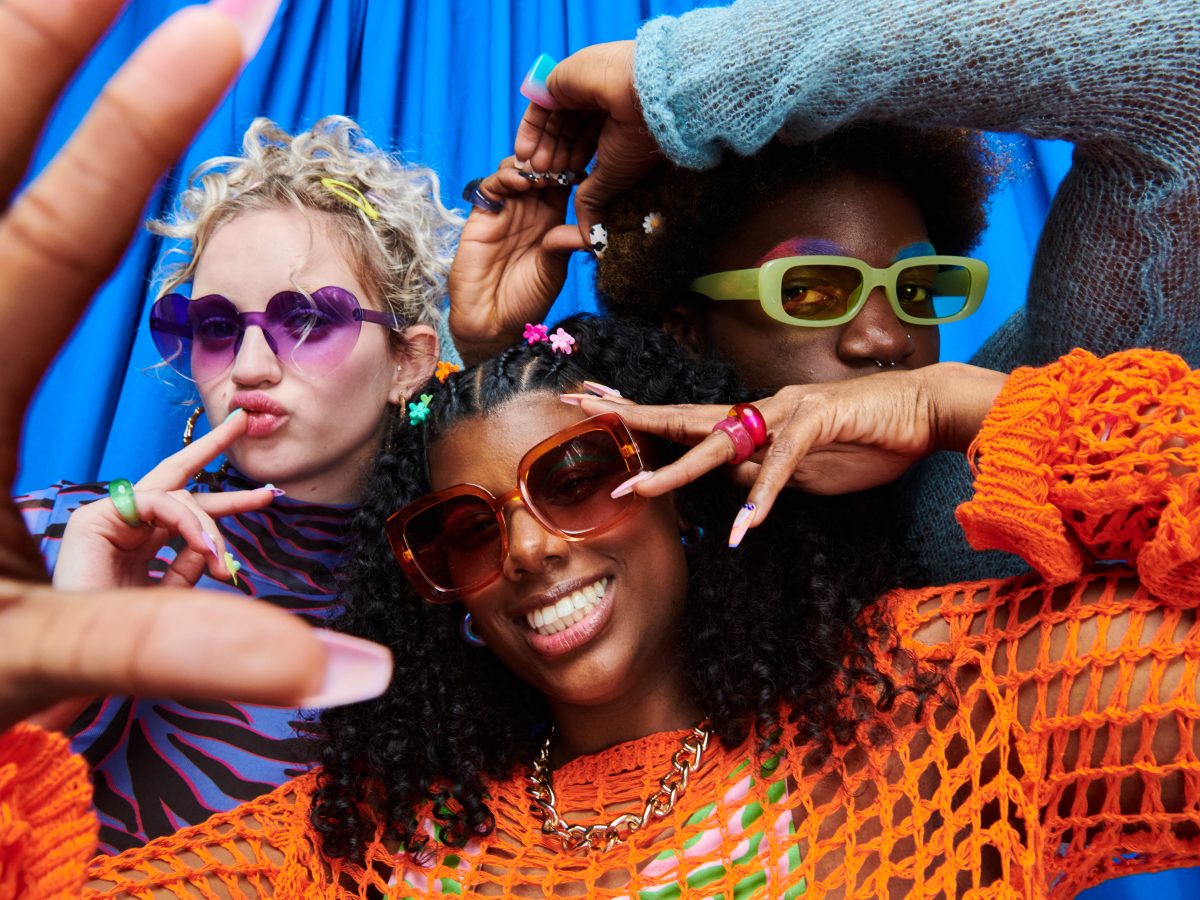

Is Gen Z fashion monolithic? Or are we simply victims of the fashion industry’s mind games? The answer is complicated: It is yes and it is no. Conjure an image of Gen Z fashion, and a specific uniform likely springs to mind: ultra wide-leg jeans, faux fur yeti boots, boxy cropped jerseys, Bermuda shorts, bubble skirts, and the omnipresent Adidas Sambas, all topped off with maximalist accessorizing.
Drawing inspiration from seemingly every era at once, Gen Z style is a chaotic yet perfect blend of comfort, athleisure, Y2K nostalgia, and individuality. Yet, despite this freedom, we face paralyzing decision fatigue caused by unfettered access to hundreds of thousands of brands.
Trend cycles now spin so rapidly that we often outsource the task of styling to social media platforms. We let algorithms do the thinking for us, opting to appear “fashion-forward” rather than authentically stylish. For those identifying as “fashion girls” or “fashion guys,” the search for identity has never been more complex, specifically when triangulating what is accessible, affordable, and high-quality.
This internal battle has sparked a contradictory reaction, fracturing the generation into two distinct niches: the hyper-individualists (often tinged with gatekeeping elitism) and the hyper-maximalists (rooted in subconscious consumerism and the peer pressure to stay “relevant”).
While fashion has historically provided a sense of belonging for youth culture, we are now seeking the illusion of style. We recreate looks that satisfy the algorithm, plaguing timelines with “Fit Pics” and “OOTDs” that follow a rigid, repetitive formula.
“In real life, the great majority seems to be a reflection of what they see on social media or what the wave is on Pinterest and TikTok,” says Nikki, a stylist, influencer, and Georgia State University student, reflecting on the style choices of her Atlanta peers. “I tend to see the great majority of Gen Z people in real life who want to mirror that. I do see a sector of those who are a little more fashion-forward or individualistic, not reflecting too much of what’s on social media—but that’s just a small group.”
That small group of unapologetic fashion lovers resembles Jalen Gunter. A model, stylist, and fashion creator, Gunter refuses to move at the breakneck speed of the trend cycle. Instead, he has spent years curating a personal aesthetic through the pursuit of identity and the study of fashion evolution.
“Fashion once was a place to come and be unique, if that’s what the draw was. Now, the draw is to come and blend in. Come and be like everybody else,” says Gunter. He points to the ulterior motives behind brands trying to court young buyers.
“Whether it’s fast fashion or luxury fashion, at the end of the day, they’re businesses. They don’t truly care whether you feel you need to look fly; it’s about selling you a product. So, I personally have a distrust of retail and luxury fashion.”
Gunter hits on a hard truth: Many brands market to Gen Z for clout, not connection. They push the narrative that buying into an “aesthetic” or acquiring a specific luxury logo equates to having style. This false narrative harms young consumers and fuels an industry that profits from our willingness to chase every micro-trend.
Information is essential to the science of styling. Without it, consumers often overload outfits with multiple trends at once, causing intention to contradict execution.
AK Brown, a millennial who experienced the peak of the Abercrombie and Aéropostale era firsthand, admires Gen Z’s freedom of expression but critiques the execution.
“Where I struggle with the whole Maximalism movement is that just because you throw a whole bunch of stuff on and call it an outfit, to me, does not make it stylish or cohesive,” Brown notes.
With brands increasingly retreating from DEI initiatives, body-positive movements, and size inclusivity on runways, Brown’s experience across product development, PR, and styling has made her acutely aware of the industry’s deeper tactics. She emphasizes to young shoppers that their struggle to find a style is by design.
“I would not have known that if I didn’t go and experiment and try on different clothes from different brands,” Brown says. “You have to understand that they are literally running psychological warfare against us as shoppers.”
However, not all hope is lost. Odunayo (aka The Fashion Roadman), a Gen Z fashion critic and Central Saint Martins graduate, believes the generation’s defining trait is resistance. He holds publications and luxury brands accountable, noting that Gen Z style is often a reaction to the world around them.
“I think Gen Z is definitely very against racism and fascism, so a lot of us do dress in a way that rebels against that,” Odunayo explains. “Clothing is always a response to politics, whether people see it or not. A lot of things that people choose to wear, day-to-day, is a very political statement.”
Life can make spending meaningful time with your clothes feel like a luxury. However, seeking inspiration from magazines, people-watching, or even Pinterest boards can be a catalyst for self-discovery if done with intention. Everyone has the potential to be stylish through experimentation and confidence.
Gen Z fashion, beyond the trends, aesthetics, and niches, offers an opportunity to slow down. We must stop letting the industry play mind games with our wallets and start pursuing style for ourselves, with true freedom and self-expression.